TR 
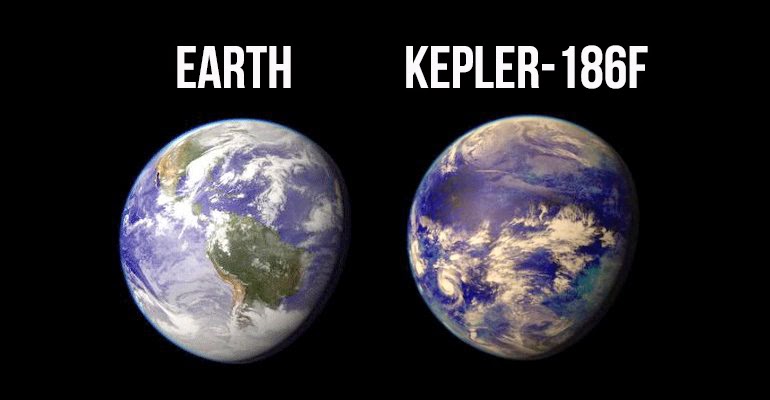
Earth’s Twin Found in the Proxima Centauri System
Researchers have officially confirmed the existence of a second Earth, orbiting within the Proxima Centauri System — our closest neighboring star. This newly discovered planet, named Proxima b, is believed to possess vast oceans, much like Earth, and could potentially harbor alien life.
Over the years, astronomers have identified thousands of exoplanets across the cosmos, yet none have shown the unique, life-friendly conditions found on Proxima b. Early observations reveal that it is rocky, slightly more massive than Earth, and located within the habitable zone of its star — a region where liquid water can exist.
This discovery brings humanity one step closer to understanding our place in the universe — and perhaps, to finding another world like home.
In a groundbreaking discovery, NASA’s Kepler Space Telescope has identified an Earth-like planet, Kepler-186f, within the habitable zone, also known as the “Goldilocks zone,” of a neighboring star in the Cygnus constellation, approximately 500 light-years away. This marks the first time an Earth-sized planet has been found within the habitable zone of another star.
What’s even more exciting is the presence of four additional planets orbiting the star in the Kepler-186f system. If the neighboring star is similar to our Sun, the chances of life on Kepler-186f skyrocket.
“We are only aware of one planet where life thrives – Earth. In our quest to find life beyond our solar system, we focus on finding planets with features similar to our home planet,” explains Elisa Quintana, a research scientist at the SETI Institute and lead author of the paper published in Science. “The discovery of an Earth-sized habitable zone planet is a major breakthrough.”
The star in the Kepler-186f system has half the mass and size of our Sun and receives only a third of the energy that we receive from our Sun. Kepler-186f completes one orbit around its star in 130 days.
This discovery adds to the estimated 40 billion Earth-sized planets thought to exist in our Milky Way galaxy and is a tantalizing hint at the possibility of finding life beyond our solar system.

Researchers have discovered a planet located in the Proxima Centauri system, one of the closest stars to Earth which they believe harbors liquid water and potentially alien life.
The planet, named Proxima B is believed to be around 1.3 times the size of our planet and has the ideal temperature on the surface for water in a liquid state to exist.
Proxima B is located four light years away from Earth –over 25 TRILLION MILES—meaning that in order to visit the planet in the near future, future generation would have to come up with super-fast spacecraft that would allow them to travel to the Proxima Centauri system with ease.
If the planet proves to be ‘a SECOND Earth’ it could become one of the best options for future human colonization.
Researchers believe that the temperature on the surface of the planet could be between -90 degrees Celsius and 30 degrees Celsius.
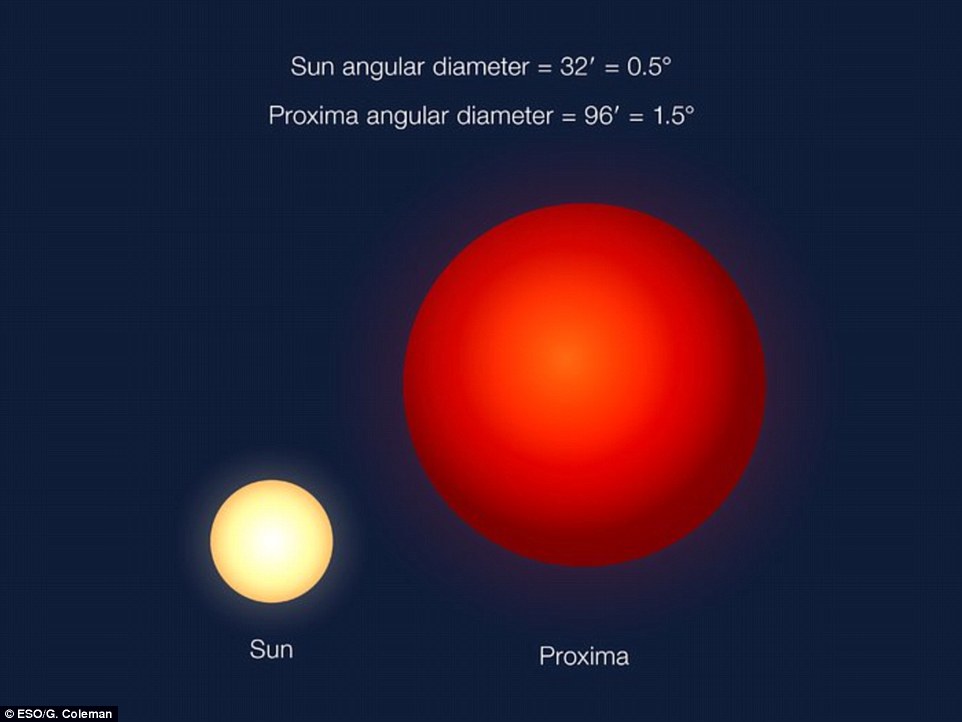
According to researchers, Proxima B may be the best opportunity we have come across to find DIRECT evidence of the existence of Alien Lifeforms outside of out solar system.
The planet which has already been dubbed ‘a second Earth’ is located at an ideal distance from its host star for liquid water to exist, which means that life as we know it is very likely to exist.
Proxima B is the closest exoplanet we have ever discovered, and according to researchers, a mission to the planet to search for signs of life could be something achievable within our lifetime.
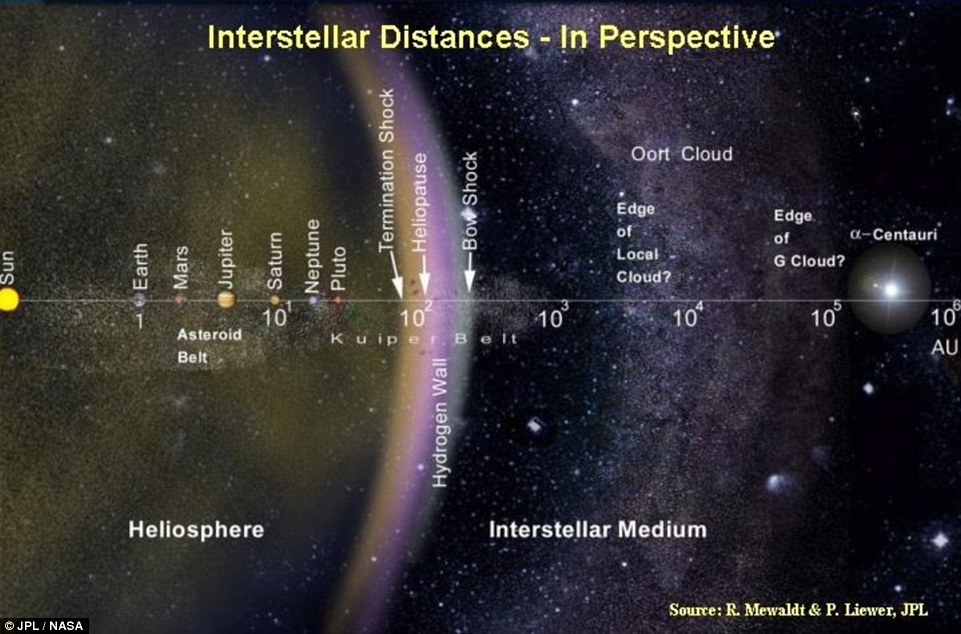
The distance from our planet to Proxima B may seem insurmountable, but it is actually formidably shorter when compared to other candidates to host life. This means that Proxima B could become the first objective for future interstellar travel.
Proxima Centauri is a red dwarf located in the constellation Centaurus. The star itself is too weak to be observed with the naked eye, but in recent months, scientists have not taken their eyes off of it.
In fact, during the first half of this year, Proxima Centauri was followed regularly with the HARPS spectrograph installed on the 3.6-meter telescope of the European Southern Observatory (ESO) in La Silla (Chile) and monitored simultaneously with other instruments from around the world.
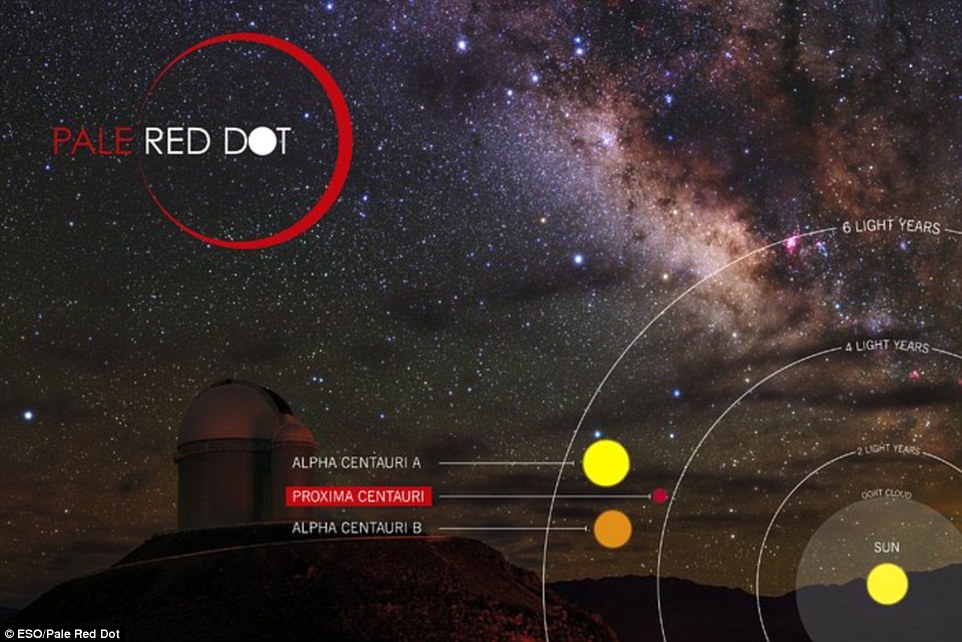
“Many exoplanets have been found, and many more will be found, but searching for the closest potential Earth-analogue and succeeding has been the experience of a lifetime for all of us,” Dr. Guillem Anglada-Escudé, lead author of the paper, said.“Many people’s stories and efforts have converged on this discovery. The result is also a tribute to all of them. The search for life on Proxima b comes next.”
There are already two papers which describe and go through the potential habitability of Proxima B.
Future observations, for example using the 39-m ESO E-ELT telescope under construction in Chile, will allow further investigation of Proxima b and of the hypothetical presence of a thick atmosphere and a liquid water reservoir. If this turned out to be the case, it would be very exciting that the nearest star to the Sun also hosts the nearest habitable (perhaps inhabited?) planet.